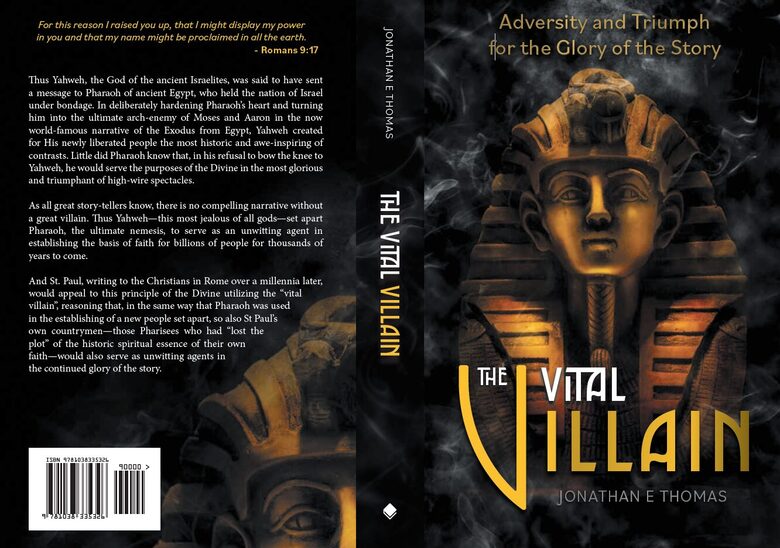
See the Grand Story with New Eyes
The Stories of Old Through a New Lens
In The Vital Villain, first-time author, Jonathan E Thomas, explores the profound role of adversity and struggle
—
through shame
—
as an essential component of the grand story of humanity in the Bible. Starting with the life of Saul of Tarsus
—
later, Paul, and his transformation from persecutor of Christians, to a prominent apostle
—
the author illustrates the evolution of "villains" into characters that ultimately shape a narrative of hope and redemption. Thomas argues that even the darker (and villainous) aspects of the human journey can sometimes unwittingly serve a higher purpose in unfolding the "glory of the story". The author illustrates that adversity
—
much like a shadow that inadvertantly proves the reality of light by contrast
—
can enhance the grand narrative, making the triumph of good all the more meaningful (and memorable) in the process.
"Coming on the Clouds of Heaven"
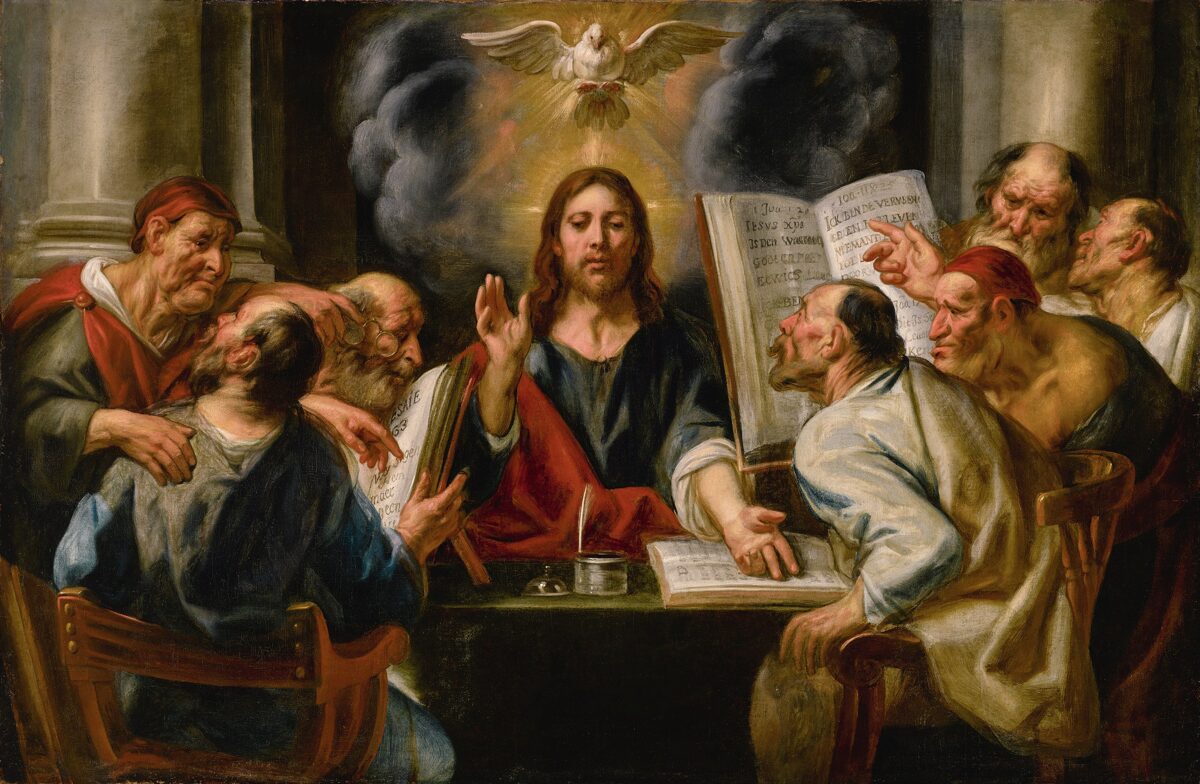 By identifying himself as the "son of man" who would soon be seen "coming on the clouds of heaven", Jesus of Nazareth had implied that he would ultimately fulfill ancient prophecies
—
particularly, from the prophet Daniel about the suffering and death of the "Anointed One".
By identifying himself as the "son of man" who would soon be seen "coming on the clouds of heaven", Jesus of Nazareth had implied that he would ultimately fulfill ancient prophecies
—
particularly, from the prophet Daniel about the suffering and death of the "Anointed One".
The honor and shame social and cultural context in which Jesus stood before the Jewish Sandhedrin was charged with a tension and expectation of political liberation, leading to outrage from religious leaders who perceived him as a threat for how he faithfully lived out the true spirit of the Torah (making them look bad by contrast), and because he had publicly condemned the Pharisees for their hypocrisy
—
this common condition at the time of outward obedience to the law's customs and ordinances, while neglecting its spiritual core. It was Jesus' aloofness to politics that ultimately enrage the religious leaders.
The “Seven Woes” Jesus pronounced were both a rebuke and a prophetic warning that consequences for Jerusalem and its Temple were coming if they did not change their ways. But this particular struggle between Jesus and the corrupt theocracy was nothing new. It was really just the historic "icing on the cake", emblematic of an age-old struggle that "Israel" had always struggled with -- trying to maintain authentic faith even amidst the most dire (and shameful) of times.
The Vital Villain explores these tensions between the early followers of Jesus and the comfortable (and compromised) religious authorities, particularly how they perceived him a threat to their political stability and prestige under Roman dominance. Corrupt and decadent figures like Caiaphas feared that the "free-spirited" Jesus
—
if left to go on as he was
—
could ultimately lead to the loss of their temple and nation (by calling into question what a true "Jew"/Israelite really was), prompting them to call for his crucifixion (that is, humiliation). This was not just punishment (revenge), but also a desperate measure to maintain their prestigious status quo within their delicately balanced political arrangement.
But it would ultimately
be through this cowardly and corrupt measure that we discover just one more example of a recurring theme of overcoming and transformation throughout the entire Bible. Jesus' death and resurrection illustrate a (shocking) path from shame to glory, mirroring previous stories from the Hebrew scriptures (particularly of Joseph sold into slavery in Egypt) where betrayal
—
despite it's horrific sting
—
ultimately led to the opposite of what would have been expected. The Vital Villain emphasizes the evolution of the Jewish/Christian idea that suffering through humiliation does not necessarily negate one's honor (contrary to what had been previously understood). Rather, the path that before was to be avoided at all costs, had now
—
to the shock and horror of the ancient world
—
become "the Way" itself.
The Grandest of Journeys
The Vital Villain explores the complex relationship between ancient Jewish society, Roman powers, and ancient prophetic visions. Particularly it highlights (and threads) how the apostle John, exiled on Patmos, used imagery of locusts and vultures to symbolize the soon-to-arrive Roman forces, drawing parallels to ancient traditions where enemies were depicted (personified) as destructive locust swarms.
- Apocalypse: John’s metaphorical descriptions of armies as locusts were profound symbols of actual previous geo-political invasions. His writings were a historic warning about the consequences of unfaithfulness to Israel's covenant with Yahweh.
- The Fall of Jerusalem and the Temple: Jesus of Nazareth had forcefully challenged the decadent and self-serving societal norms of Jerusalem. His warnings of impending destruction, though, were not just his own, but also reflected previous prophetic visions of warning, which would ultimately culminate in the fall of Jerusalem in year 70
— a time when the "Son of Man" would be seen "coming on the clouds of heaven".
- Divine Abandonment: The tension felt
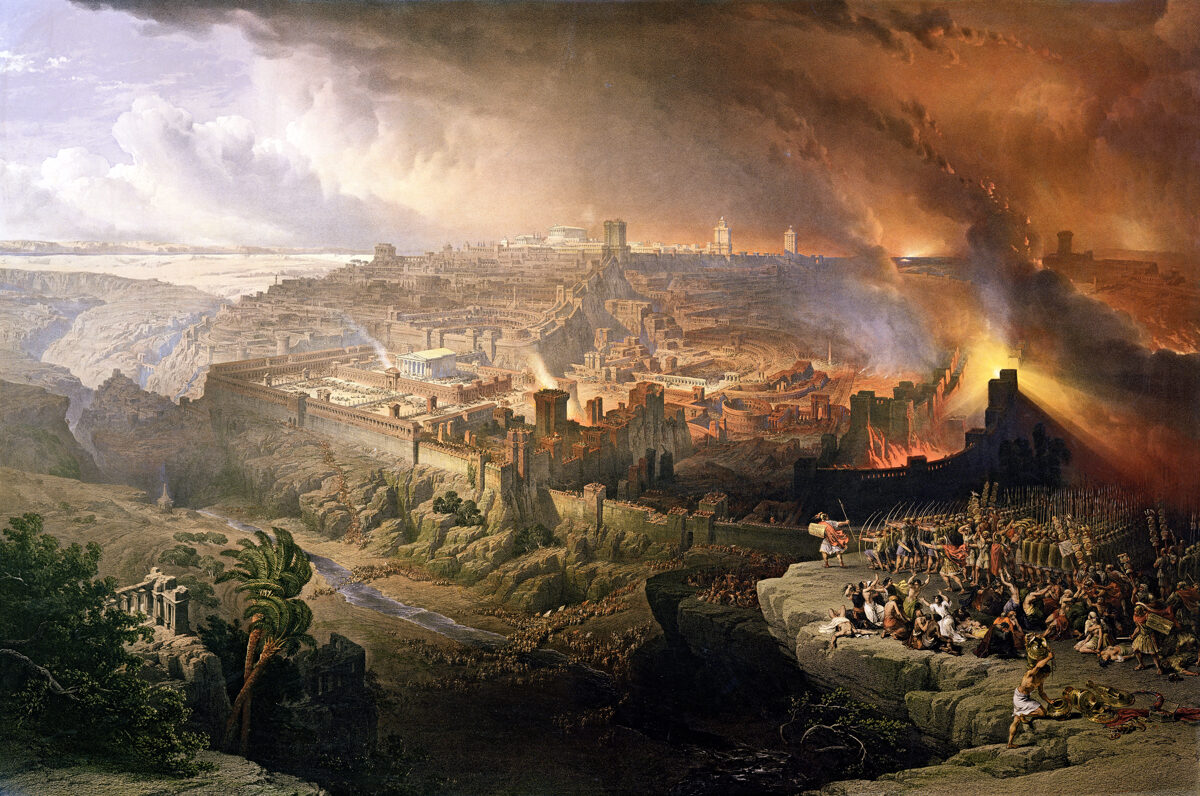 by citizens like Josephus during the siege of Jerusalem showcase how perception of divine abandonment (the fatalism of the gods) had historically underlied ancient sentiment. The confrontation between the Jewish zealots and Rome reflect this long-standing tension of popular ideals of "freedom" and identity.
 - Triumph through Struggle: The Vital Villain suggests that struggles faced by Israel and the challenges posed by Roman rule ultimately together
—
in tandem
—
unwittingly led to a whole new world. Josephus’s warnings and the fall of Jerusalem symbolize/epitomize the importance of genuine spiritual fidelity over comfort and "the love of money"
—
the root of all kinds of evil (1 Timothy 6:10).
- Hope for a New Beginning: But amidst this widespread destruction, there was always hope of restoration and a new beginning. The idea of a "remnant" and the imagery of a "new heaven and earth" are concepts of hope for the future
—
this historic promise of "the healing of the nations" (Revelation 22:2).
The author reveals how, although tragic, the great conflagrations of the past unwittingly served as stimulus for spiritual awakening and transformation — resonating deep-seated themes of holding out faith (no matter how hopeless things may have seemed) for resolution and divine justice. The author paints a vivid picture of a future city
—
the New Jerusalem — described as a perfect cube, symbolizing ultimate harmony and the presence of the Divine.
The river running through this city offers healing
—
a profound image of the restoration and transformation of humanity. Drawing parallels with the original Garden of Eden, The Vital Villain ultimately suggests that
—
to understand our modern (and still very human) condition —
we may need to reconsider where we came from. The grand journey of humanity is seen as a cumulative cycle, and the reader is encouraged to consider that maybe the answers to our collective future may lie in our distant past.
READ A FREE EBOOK SAMPLE HERE
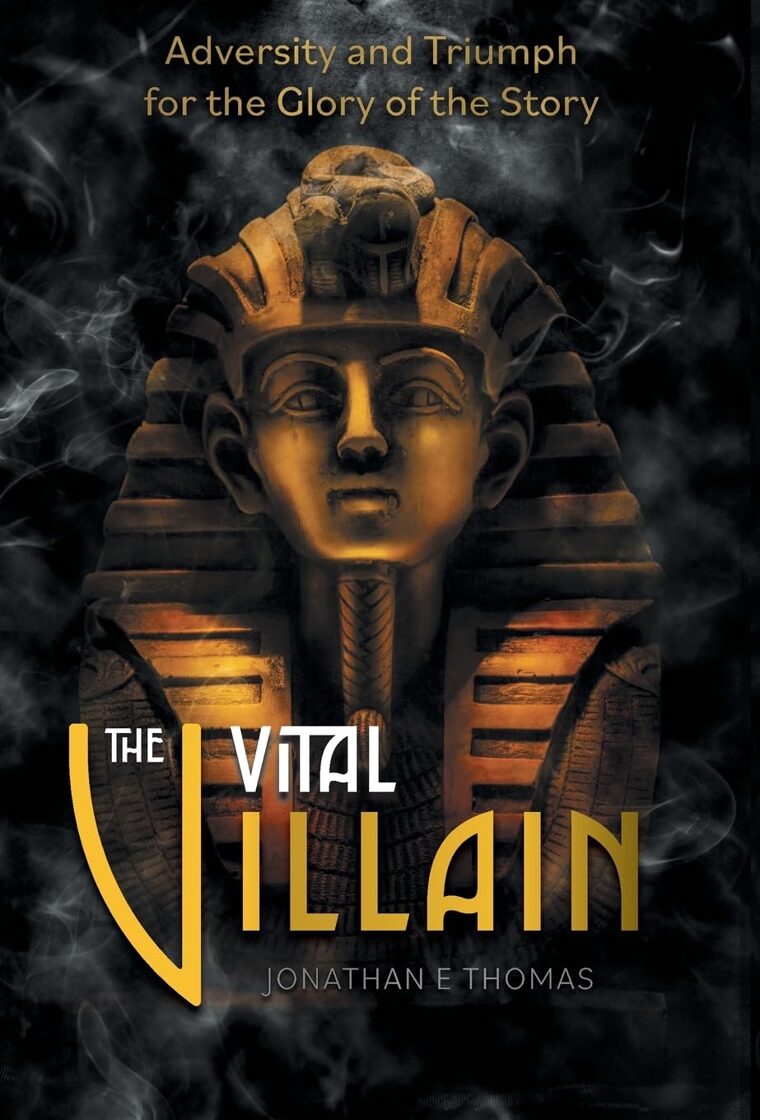 Is the grand story of the Bible something that has always seemed obscure and distant to you? Have you struggled to piece together it's overarching meaning? Has this most famous of all books that stands in the background of all western societies seemed to you boring, irrelevant, and impenetrable? Do you struggle to engage the grand story with interest?