Rethinking "Hell"
The Ancient and Pervasive Fear of Grave Desecration
Read this article also on our Substack.
I remember being taught how Jesus — more than anyone else — explicitly taught about this place (apparently after death) called “hell”. In response to a movement creeping in amongst evangelical Christians called “universalism” (the belief that all will be released from “hell” eventually), evangelical preachers would (rightly) point out how Jesus mentioned this place — “gehenna” — more than anyone else, and that Jesus’s words needed to be dealt with on their own terms.
And indeed, there was a movement of people that seemed to gloss over the hard sayings of Jesus in the gospels (not just about hell, but many things), and so those very preachers and teachers inspired me to dig deep into the words (and context) of Jesus and uncover what was really meant when he said to the Pharisees that they would be “condemned to hell”. Who was he speaking to? And what was he referring to? And why was it that, when he talked about it, it was only in the context of religious hypocrites? And what is the significance of the “Old Testament” verses that Jesus quoted in direct reference to this place called “gehenna”?
The very helpful Bart Ehrman
Now don’t get me wrong. There is much I do not agree with that Mr. Bart Ehrman teaches, as I have discussed in a previous article, I think he goes way off the rails in his Bible interpretation (just as even CS Lewis and historian Tom Holland have).
All that said, though, in a recent interview, he discussed the historical background of Jesus warning about being “thrown into hell”. This was extremely helpful to me, and as I think you also will find, it makes much sense not just of the idea of “hell” (gehenna) but of the other things he mentions in context—particularly being “salted with fire”. Here is a short clip from the youtube video:
The Great, Pervasive Fear of Grave Desecration
Can I ask you a personal question, dear reader? After you die, are you concerned with what happens to your physical body? Do you have a preference to be buried? Or maybe cremated? Maybe you have no preference at all and don’t even need a grave stone or marker where people can go to remember you? Would you prefer your ash to be thrown to the wind? Maybe you would just like a temporary marker in the forest or by the ocean?
Forgive me prying. The reason I ask is to highlight your own preference in contrast with the ancient world — where literally everyone (who was not a slave) would have been absolutely terrified at the prospect that their own grave site/memorial could be desecrated or dishonored. In contrast with some modern “spiritual” or animistic folks who have no concerns at all about the fate of their physical body after their death (because they believe their true essence is their spirit and not their body), ancient people thought very differently.
In fact, so deep and widespread was the fear of one’s own physical body being desecrated after their own death (of course, these sentiments being deeply connected with ancient notions of honor and shame), people would go to great lengths to ensure the safety (honoring) of their own body (and memorial site) — paying great sums of money (as the rich man had arranged for Jesus after he died) and making significant protective security arrangements. Unlike some modern people, protecting one’s own corpse after death had direct connections with their honorable status in the after-life (and also protected the honor of the community that was left beind). The prospect of desecration by vandals, thieves, weather, or wild animals/beasts was unbearable to just consider.

Isaiah 66 - “…loathesome to all mankind”
The very last verses of the hugely long book of the ancient prophet, Isaiah, contain ideas that Jesus of Nazareth referenced (and embellished upon), directing their meaning towards the religious leaders of his own day — implying the warnings of the prophet in ancient times (which actually came to pass) would also apply to Jesus’s own time. But what had Isaiah said specifically to begin with?
In chapter 66:14b-16, it says:
…the hand of the LORD will be made known to his servants,
but his fury will be shown to his foes.
See, the LORD is coming with fire,
and his chariots are like a whirlwind;
he will bring down his anger with fury,
and his rebuke with flames of fire.
For with fire and with his sword
the LORD will execute judgment on all people,
and many will be those slain by the LORD.”
All the ancient Israelite prophets had regularly warned the nation of Israel that, if they did not follow the rules of their covenant (that they had signed up for), their own god would subject them to the curses that had long been promised since their own founding — they would be subject to being conquered and sold into slavery by their neighbors. This prospect of geopolitical invasion would have been considered “the Day of the Lord” and would certainly entail great “fire”, “fury” and “whirlwinds” and “swords”. And for those unfortunate enough to experience this terrible time, the very last verse of Isaiah spelled out their fate:
And they will go out and look on the dead bodies of those who rebelled against me; the worms that eat them will not die, the fire that burns them will not be quenched, and they will be loathsome to all mankind.” (Isaiah 66:24)
Let’s not mince words… this was a threat — more specifically, a direct warning. And it would have filled the ancient Israelites (who heard it and took it seriously) with fear. Why? Because they, just like everyone else in the ancient world, desperately feared the prospect of a death of humilitation or of their own corpse being desecrated after death. That the corpses of themselves or their loved ones (or anyone in their honorable community) could suffer the fate of being left to burn in an open field without proper honor, protection, and dignified burial — was so grotesque to them, they would have shuddered at the thought.
So when the prophet said…
the worms that eat them will not die
the fire that burns them will not be quenched
they will be loathsome to all mankind
…what was it exactly that would not die? What was it exactly that was burning and would not be quenched? Answer? Their own corpses! Although Isaiah does not spell this out for our modern ears, this threat of the prophet would have clearly brought to mind their greatest fears. And when he said that “the worms that eat them will not die”, this was not meant to be taken literally (as if the worms themselves were everlasting), but rather was hyperbole meant to really “rub it in their faces” — this prospect of the shame of such an outcome — thus, hopefully, prompting them to change their ways before it actually came to pass.
To translate this to modern ears, the shame from such an event would “linger in the air” for ages to come — the “worms would not die” — i.e. everyone would look back in regret, horror, and shame. Yes, no longer having a context in which bodies would be honored and revered instead of desecrated (i.e. no longer having an independent nation) would hang heavy and terrible over everyone. And indeed, just as the prophet had warned, so it had come to pass in Isaiah’s own day.
Cut off your own hand?
With this understood, we can better appreciate what Jesus really meant when he talked about doing “whatever it takes” in order to “stop sinning”:
If your hand causes you to stumble, cut it off. It is better for you to enter life maimed than with two hands to go into hell, where the fire never goes out. And if your foot causes you to stumble, cut it off. It is better for you to enter life crippled than to have two feet and be thrown into hell. And if your eye causes you to stumble, pluck it out. It is better for you to enter the kingdom of God with one eye than to have two eyes and be thrown into hell, where:
‘the worms that eat them do not die, and the fire is not quenched.’
Everyone will be salted with fire." (Mark 9:43-49)
Did you notice the bolded part? Can you see how Jesus is referencing the very end of Isaiah 66? In other words, he is taking the same posture of the prophet, Isaiah, and re-appropriating the same warning for his own day — for his own people. Particularly in the verses right before this quote, he is warning about causing harm to children — a truly terrible and most shameful of sins. In fact, as Ehrman mentions in the video above, there had been some Israelites who had joined the reprehensible Canaanites in sacrificing children — even infants — to the god, Moloch.
He was basically saying this: If you don’t stop “sinning” (i.e. going against the covenant you signed up for) — in the same way that Yahweh destroyed the national independence of Israel in the past, he will kill you and shame you in the most horrific way possible — once again. Thus, the “smoke of your torment will rise forever and ever” — ie. your legacy as the most shameful nation and people will ring out throughout history, “forever” (i.e. a very long time—for ages and epochs to come). In other words, the whole reason for your existence as a people will be just to serve as a warning to others! Yes, the whole reason Isaiah (and thus also, Jesus) had said “the worms that eat them will not die” was to convey the idea of “your despised memory ringing out throughout history”.
So Jesus’s point, then, was not so much to say that you should actually cut off your own limbs (although of course, it conceivably could entail that). Rather, what he meant was that you should do whatever it takes to avoid this most horrible of fates (for yourself, your nation, and your people). In other words, if the abuse of children is widespread throughout your society (“…anyone who causes these little ones to sin…”) and you have abandoned your commitment to your covenant with Yahweh—it would be better if you cut your hands off to begin with (the hands that would have sinned and brought shame). To “enter the kingdom of God crippled” was better than to be shut out from it entirely — i.e. better to have caused yourself self-harm and at least maintain your honor and purity before your people and your god, than to have your whole nation and culture shamefully annihilated by your geopolitical neighbors as a result of your covenant-violations.
Salted with Fire?
In verse 50, Jesus said:
Salt is good, but if it loses its saltiness, how can you make it salty again? Have salt among yourselves, and be at peace with each other.”
What is this “salt” that he’s talking about? When I was younger, I was involved in church activities where we memorized passages like these. But I can see now I hadn’t really understood the meaning of the very words that I had memorized.
Salt in the kitchen—and in life
Practical question: What does salt do when added to food? Does it not bring it to life with more taste/flavor than it had originally? On top of being a preservative for food (and actually, having health benefits), salt functions primarily as a means to bring blander food back to life.
When Jesus said that we should have “salt in ourselves”, this was a allegory he applied to our spiritual lives. In reality, he was insulting the comfortable and arrogant religious elites — particularly the Pharisees — who, in their elite and prestigious and lazy privileged political position (they were the masters of their Jewish/Roman political arrangement), may have even abused children (as has been the case in recent decades with prestigious elites in the Catholic church — also, amongst prominent protestant leaders). Jesus was essentially saying they were dead inside — no spiritual fire or passion for the essence of their faith at all (no “salt”). To Jesus, such comfortable people were prone to the most terrible of covenant violations (child abuse).
Thus, he was implying: “…how can these terrible and hypocrital gate-keepers of the faith ever come back to their own principles? It is probably too late for them” — i.e. “…how could they be made salty again?” Thus why he said in verse 49:
Everyone will be salted with fire.”
In other words, these so-called spiritual leaders who were actually anti-religious walking tombs of death getting in the way of authentic faith (no “salt” in their lives, no spiritual vitality) will eventually come to a point where they will be forced off their comfortable and lazy asses. And for a short time before their destruction — as they see it approaching, in fact — they will “come to life” in a way they had never before (when they had been busy compromising their principles for political prestige). And thus, for a short time, you will see them “run” and “dance” (in terror) as they finally realize that “the Day of the Lord” has truly arrived.
In the same way that in the old wild-west movies, the cowboy with the gun would say “dance” before shooting at the feet of the other person — i.e. making them dance “come alive” and realize they were in trouble — so also Jesus promised that the religious elites would soon also “dance” as they saw their own judgment arriving.

But after this “dance”, their whole world would go up in flames. And as Jesus had referenced from the prophet Isaiah — afterwards — “the worm that eats their corpses will not die, and the flame that engulfs them will rise forever”. In other words, for ages to come, those Pharisees would serve as the historic gold standard/witness of what true Judaism was NOT supposed to be. And indeed, even now, 2,000 years after the fall of Jerusalem and its Temple, “the smoke of their torment” still rings out. We can still see “the worms that do not die” consuming their corpses — i.e. that is, we feel the shock, horror, and shame of the judgment that their own God brought upon them.
THIS is what “hell” is — in context. Whether it is Jesus, or the apostles, or John in Revelation, all this talk of things “burning forever” and “eternal torment” — they are all profound allegories (based on the prophets and context that had come before) for the shame of those who claimed to be one thing, but had lived their whole lives in actual opposition to the spirit of the thing that they claimed to champion. It is an allegory for RECKONING and the total destruction of their whole nation — which, for first century Judaism, arrived in year AD70, as I describe this fascinating story in my new book.
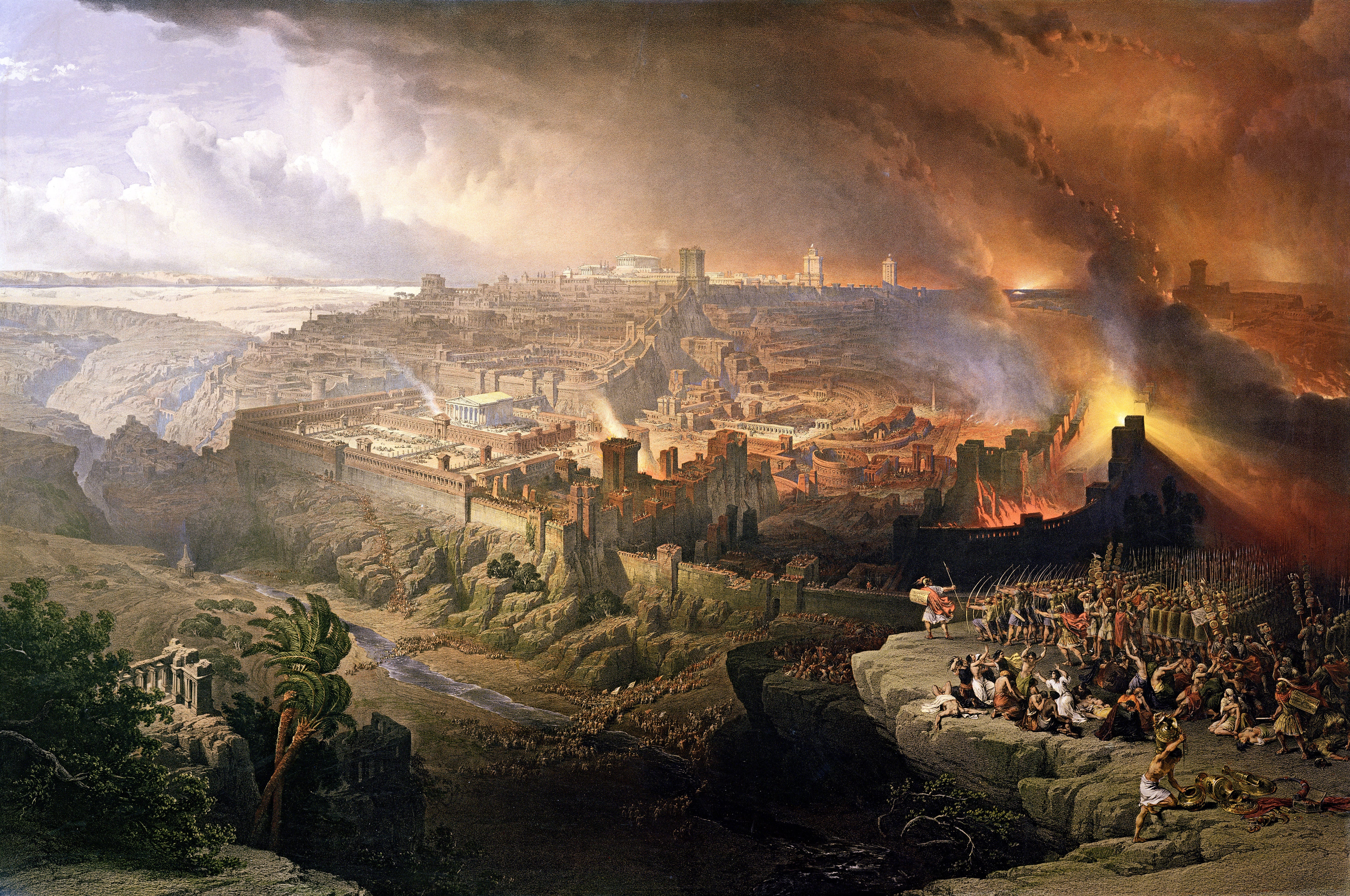
Moving “hell” (gehenna) to an other-worldly place after death is to greatly misunderstand the words and context and intentions of Jesus. No, Jesus did NOT promise a place of “eternal torment” after death where “unbelievers” are consigned to tortures in some sort of spiritual torture chamber. No, his language is loaded with a background of honor and shame, and is meant to signify the shame of the destruction (at the time) of the whole nation of Israel — an event that killed over a million people.
I recognize that for those who have been raised in a tradition where a literal hell after death was believed in, this can be a hard pill to swallow. But I believe that we are far past time to understand the scripture better in their context.
And I feel that we would do well to reconsider our own lives as well. As is apparent to me, “the judgment of God” (ie. the destruction of society) is by no means just a phenomenon of the past. Yes, I think that we should consider whether we ourselves have “salt in ourselves” — to make sure that we are not eventually “salted with fire”. Yes, if we become dead inside, we always risk being “caught off guard” in the worst way — like a thief in the night.